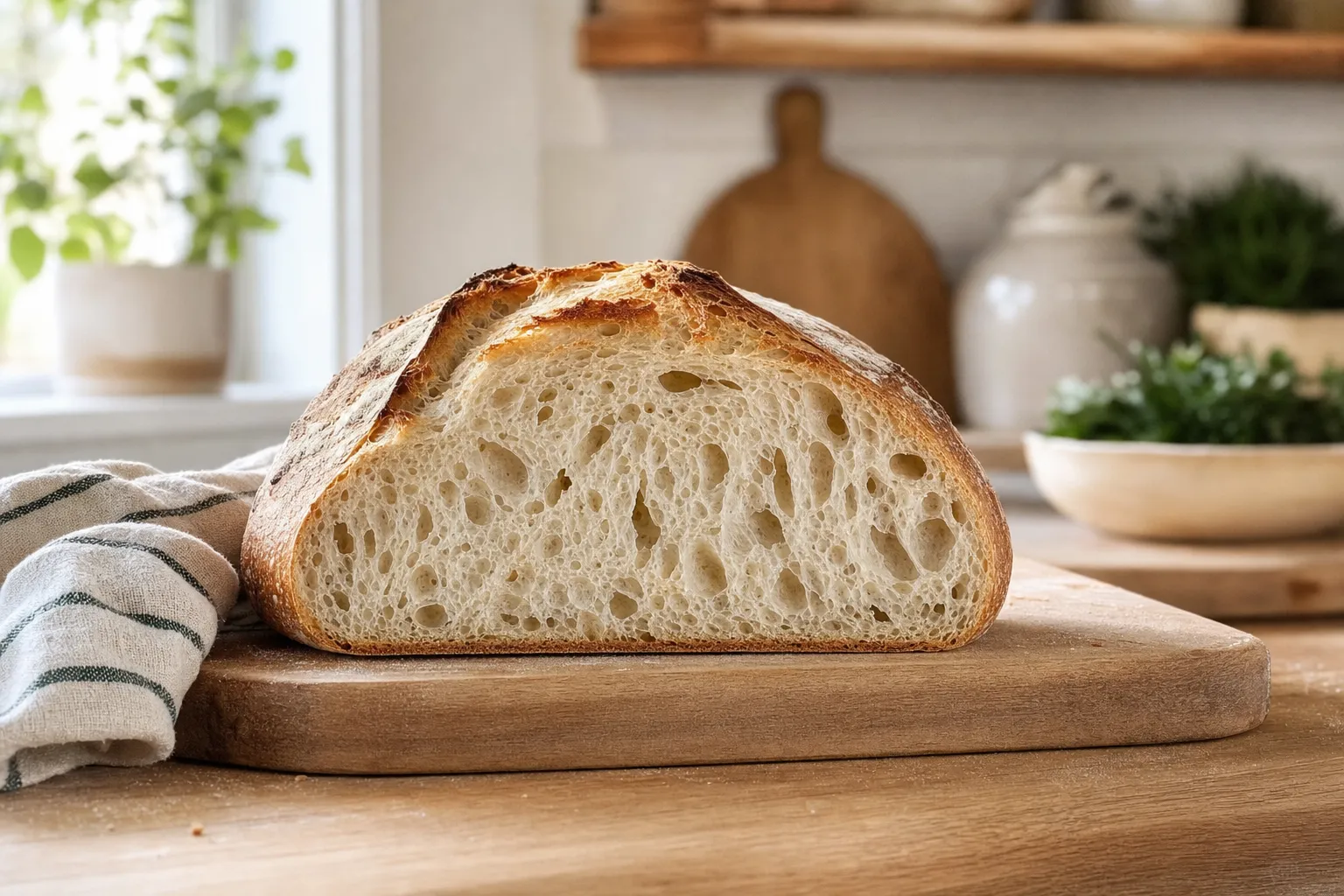
A fresh sourdough loaf is meant to have a good first day, but it should not have only one good day. The best way to store it depends on the loaf and how you plan to eat it. Keep a crusty round on the counter for dinner, keep a soft sandwich loaf protected for lunches, and freeze the portion you will not reach in time.
Start with the kind of loaf you brought home
Sourdough is not one single storage problem. A round loaf with a thick, crackly crust needs a little breathing room. A tender sandwich loaf needs more protection from drying out. A pan of focaccia has its own job, usually dinner tonight or a quick reheat tomorrow. When you store every loaf the same way, one of them is likely to lose the quality you bought it for.
Start with your plan. If you are serving bread with soup, pasta or a shared dinner tonight, leave it on the counter and let the crust stay lively. If it is destined for weekday toast and packed lunches, protect the soft crumb. If you know half the loaf will still be around next week, do not wait for it to go stale before you make room in the freezer. Our guide to freezing sourdough bread walks through the easy whole-loaf and sliced options.
That is the useful rule: store the bread for its next meal, not for the version of your kitchen you wish existed. A good loaf should make breakfast, lunch and dinner easier. It should not become another thing to manage.

Let the loaf cool before you cover it
Warm bread looks ready long before it has finished cooling. The aroma fills the room, the crust is golden and it is tempting to put it away before you move on with the day. Give it a little time instead. A loaf that goes into a sealed bag while it is still warm traps steam, and that moisture softens the crust and makes the loaf less pleasant by the next meal.
Set the bread on a rack, board or clean towel and wait until it no longer feels warm through the bottom. The exact time depends on the size of the loaf, but there is no prize for hurrying it. Cooling fully protects the texture you want to keep, whether your favorite part is the crisp edge or the soft center.
If the loaf is already sliced when you bring it home, the same idea applies. Let it reach room temperature before closing it up. If it arrives in a paper bakery bag, that bag is a good short-term home for a crusty loaf, but it is not a long-term shield against dry air. Choose the next storage step based on what you will eat first.
For a crusty loaf, protect the cut side and let the crust breathe
A hearty round or French-style sourdough loaf is happiest when it does not sit in a tight plastic bag all day. The crust may soften, which is fine if you prefer a gentler bite, but it takes away some of the contrast that makes a rustic loaf special.
For the first day, place the cut side down on a clean board or counter. That protects the exposed crumb while leaving the crust open to the air. If you need more cover, use a paper bag, a bread bag or a clean towel draped loosely around the loaf. Those choices help keep the cut side from drying too fast without turning the crust steamy.
Do not put a cut loaf directly against a wet counter, and do not store it near the sink, dishwasher steam or a sunny window. Bread likes an ordinary, dry corner of the kitchen. A bread box can work nicely if it stays clean and dry, but it is not required. A simple board and a sensible cover are often enough.
For a loaf intended to go alongside a sauce-heavy dinner, the crust does not need to stay perfect for days. A quick warm-up can bring back some of that good texture. The point is not to preserve it like a museum piece. The point is to keep it enjoyable through the meals you actually have planned.
For soft sandwich bread, use a bag that keeps the crumb tender
Soft sourdough sandwich bread has a different assignment. You want slices that bend for a turkey sandwich, hold up for grilled cheese and still toast well in the morning. A clean bread bag or food-safe bag at room temperature is usually the practical choice, as long as the bread was completely cool before you closed it.
Keep the bag closed enough to limit dry air, but do not squash the loaf into the back of a crowded cupboard. The soft crumb is more delicate than a crusty boule, and heavy pantry items can flatten the slices before you get to lunch. A quiet counter corner or bread box works better than a pile of cereal boxes.
Try to take out only the slices you need and close the bag again. Small habits make a surprising difference over a few days. If your household mostly eats toast, it can also help to slice the loaf before freezing. That keeps the rest of the loaf from making a daily trip in and out of the bag while everyone looks for breakfast.

Skip the refrigerator when freshness is the goal
The refrigerator feels like the responsible place for nearly every food, but bread is the exception that regularly disappoints people. Cold storage can make a fresh loaf seem firmer and drier faster, even when it keeps mold at bay for a little longer. That is not a great trade when what you wanted was a good piece of toast or a soft lunch sandwich.
For bread you expect to eat in the next few days, room temperature is the better everyday choice. Keep it dry, out of direct heat and covered in a way that matches the loaf. Check it before you eat it. If you see visible mold, smell something off or find that the bread became damp and unpleasant, it is time to discard it rather than trying to trim around the problem.
If you need the loaf to last longer than a few days, freezing is much kinder to the texture than the refrigerator. The U.S. Department of Agriculture's freezing guidance is a useful reminder to keep the freezer at 0°F or below. For bread, wrap well and freeze while the loaf is still fresh, not after it has been sitting around for a week.
Freeze the portion you will not finish
Freezing bread is not admitting defeat. It is what lets you order a good loaf without trying to force every crumb into forty-eight hours. The best package is the one that matches your household.
- Freeze slices for toast, grilled cheese and lunches. Put parchment between slices when they tend to stick, then take out two or four at a time.
- Freeze half a loaf when you usually cook for one or two people. One half can cover a week of toast while the other waits for pasta night.
- Freeze a whole loaf when you know it will be served at one meal. Thaw it while wrapped, then refresh it in the oven for a few minutes.
- Write the date on the package so the first loaf you froze is the first loaf you use. This is boring advice right up until the freezer contains four mystery bundles.
There is no need to freeze a loaf uncovered first. Cool it, wrap it closely and keep it away from strongly scented foods. When you want a slice, toast it straight from frozen. When you want the whole loaf, let it thaw in the wrapping so it keeps its moisture, then warm it gently before serving.

Bring a day-old loaf back to the table
Day-old sourdough is not a failure. It simply has a different job. For a crusty loaf, run the exterior very briefly under water or brush it lightly, then warm it in a moderate oven until the crust feels lively again. Do not soak it. You are giving the outside a little help, not turning it into a kitchen project.
For soft sandwich bread, toast is usually the easiest answer. A little heat brings the flavor forward and makes an ordinary breakfast feel more deliberate. Day-old bread also makes excellent grilled cheese, garlic toast, croutons, breadcrumbs, strata and baked French toast. When the loaf is no longer ideal for a plain slice with butter, it is often ideal for something that needs a little structure.
Try a fresh loaf beside a simple pasta dinner, then save the next-day slices for toast. The easy pasta night ideas guide has a few low-fuss ways to build that kind of meal. A good bread habit is not about serving every slice in the same way. It is about giving the loaf a useful second act.
A simple storage routine for fresh bread
When you bring home a loaf, make three quick decisions: what are we eating tonight, what are we eating tomorrow, and what should wait? Leave tonight's bread on the counter, bag tomorrow's sandwich loaf once it is cool, and freeze the rest before it loses its best texture. That is enough of a system.
Homestyle Dough makes bread after you order, so a fresh loaf is worth planning around for more than one meal. Start with the soft sourdough sandwich bread for weekday breakfasts and lunches, or browse the current shop for bread, pasta and treats that make a simple dinner feel cared for. For a little more help choosing a loaf, our guide to sourdough flavor explains how the crust, crumb and gentle tang can change from one style of bread to another.
Frequently asked questions
Should sourdough bread be stored in the refrigerator?
Usually, no. The refrigerator can make a loaf feel firmer and drier sooner. Keep the bread at room temperature when you expect to eat it in the next few days, or freeze it when you need a longer hold.
What is the best way to store a crusty sourdough loaf?
Keep it cut-side down on a clean board or counter for a short time, then use a paper bag or bread bag that gives the crust a little room to breathe. Use a loose cover when you want to protect the cut side without trapping too much moisture.
How do you store soft sourdough sandwich bread?
A soft loaf does best in a clean bread bag or another food-safe bag at room temperature. Close it enough to protect the crumb, but make sure the bread is completely cool before it goes in.
How long does sourdough bread last on the counter?
A fresh loaf is usually at its best for the first couple of days. The exact timing depends on the loaf, the weather and how it is wrapped, so let the crumb, crust and smell guide you rather than treating the calendar as a guarantee.
Can you freeze sourdough bread?
Yes. Freeze it while it is still fresh, either whole, in halves or in slices. Slices are the easiest option for toast and quick sandwiches because you can use only what you need.
Related posts
What Does Sourdough Taste Like?
A clear guide to sourdough flavour, from its gentle tang and crust to the small details that make one loaf taste different from another.
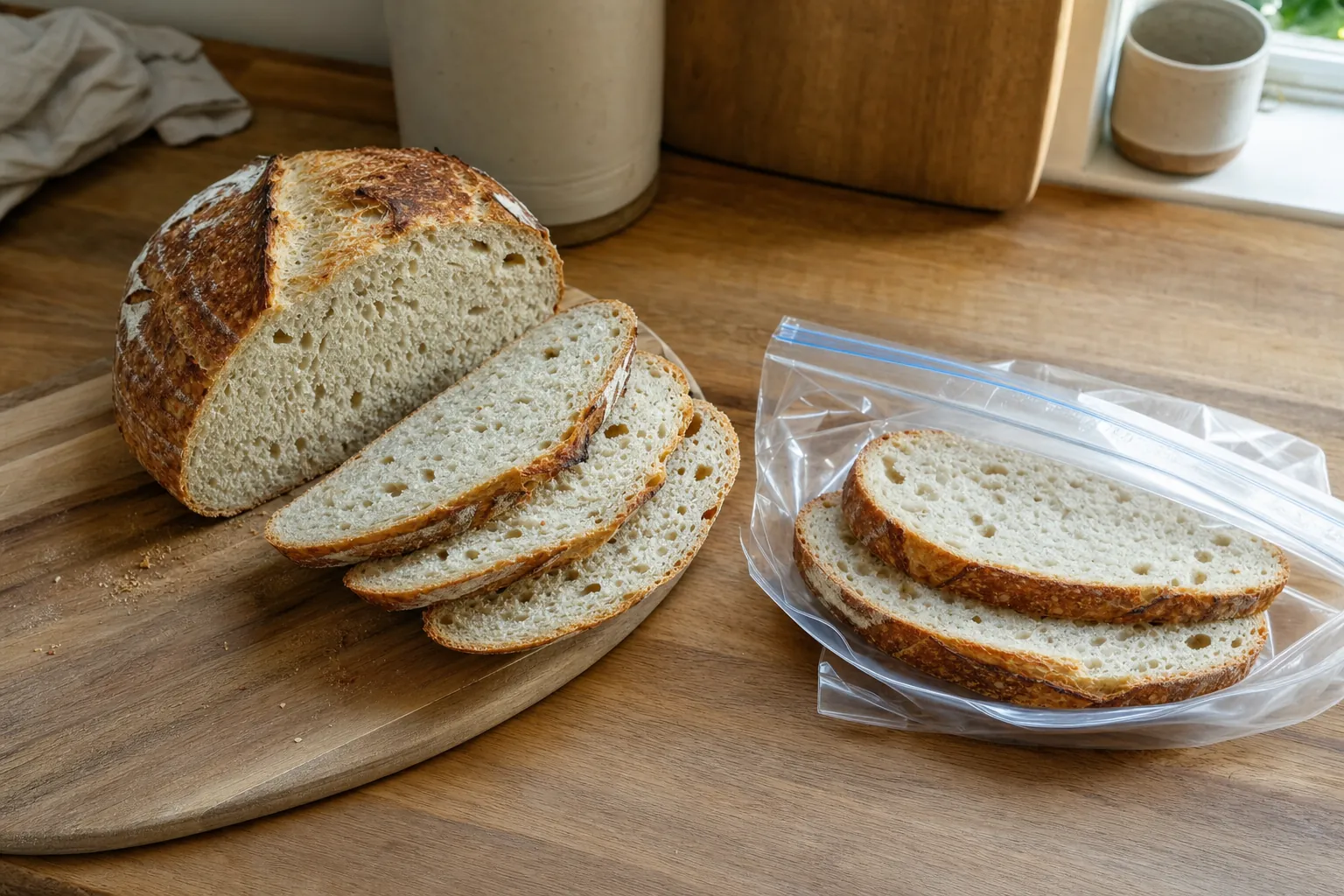
Can You Freeze Sourdough Bread? A Simple Guide
Yes. Freeze a whole loaf or individual slices the right way, then bring back the crust and flavor when you are ready to eat.

Easy Pasta Night Ideas for Any Weeknight
A few low-fuss ways to turn handmade semolina pasta, a good sauce and simple sides into a dinner worth sitting down for.

Does Dry Pasta Expire? What to Know Before You Cook It
A practical guide to dry pasta dates, pantry storage and the signs that tell you when a package is not worth using.