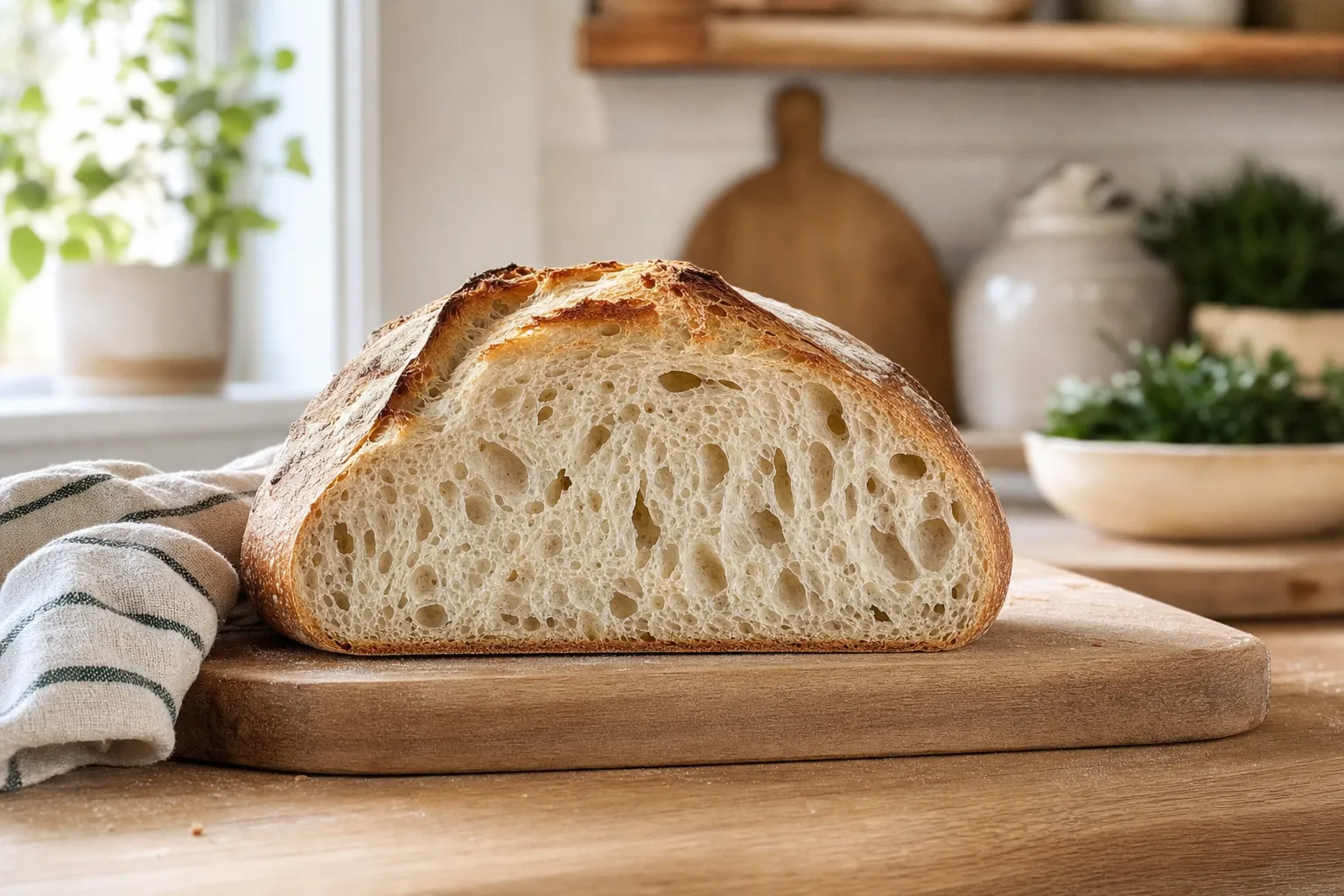
Sourdough is at its best when the crust has a little crackle and the middle is warm, tender, and ready for butter. A day-old loaf can get very close to that again. The trick is to choose the method for the amount of bread you have, then use just enough heat to wake it up without turning it dry.
A quick guide for the bread in front of you
When you are standing in the kitchen, use a few cues instead of trying to remember every method. A whole country loaf wants oven heat. A thick slice wants a toaster or toaster oven. A soft sandwich loaf needs less heat and no added water. A frozen slice can go straight to the toaster. A large frozen section needs time to thaw, then a moderate oven.
Consider what you are serving alongside the bread, too. For soup, a large warm slice with a crisp crust is lovely, so use the oven or toaster oven. For eggs or a sandwich, toast it. For cheese boards or a dinner basket, reheat a larger section at once and slice it at the table. For a small snack, do not turn on the big oven for one piece unless you genuinely want to. The best method is often the one that fits the meal without making the kitchen hotter or the plan fussier.
If the bread has fillings, toppings, or a tender sweet crumb, check it sooner than a plain crusty loaf. Those breads can brown quickly. Put them on a sheet pan rather than directly on the rack, keep the temperature moderate, and remove them as soon as the center is comfortably warm. A good rule for every loaf is to taste one piece before you decide it needs more time. Bread gives you an answer faster than a timer can.
Start with the amount of bread you plan to eat
The best way to reheat sourdough bread depends less on a perfect number of minutes and more on the size of the portion. A single slice needs quick, direct heat. Half a loaf needs enough time for the center to warm without taking the crust too far. A frozen slice has a different job again.
That is good news because there is no need to warm the entire loaf every time someone wants toast. Reheat what belongs on the table now, then keep the rest in the way that suits your household. If you are still deciding how to keep the loaf between meals, our sourdough storage guide walks through the counter, freezer, and bag choices that make the biggest difference.
For a bakery loaf with a firm crust, the oven is usually the most dependable all-around choice. It warms the outside and the center together, and it gives the crust a chance to become crisp again. For toast, sandwiches, and one-person breakfasts, a toaster or toaster oven is quicker and easier. The goal is not to follow one method out of loyalty. It is to match the method to dinner.
The best method for a whole loaf or large piece
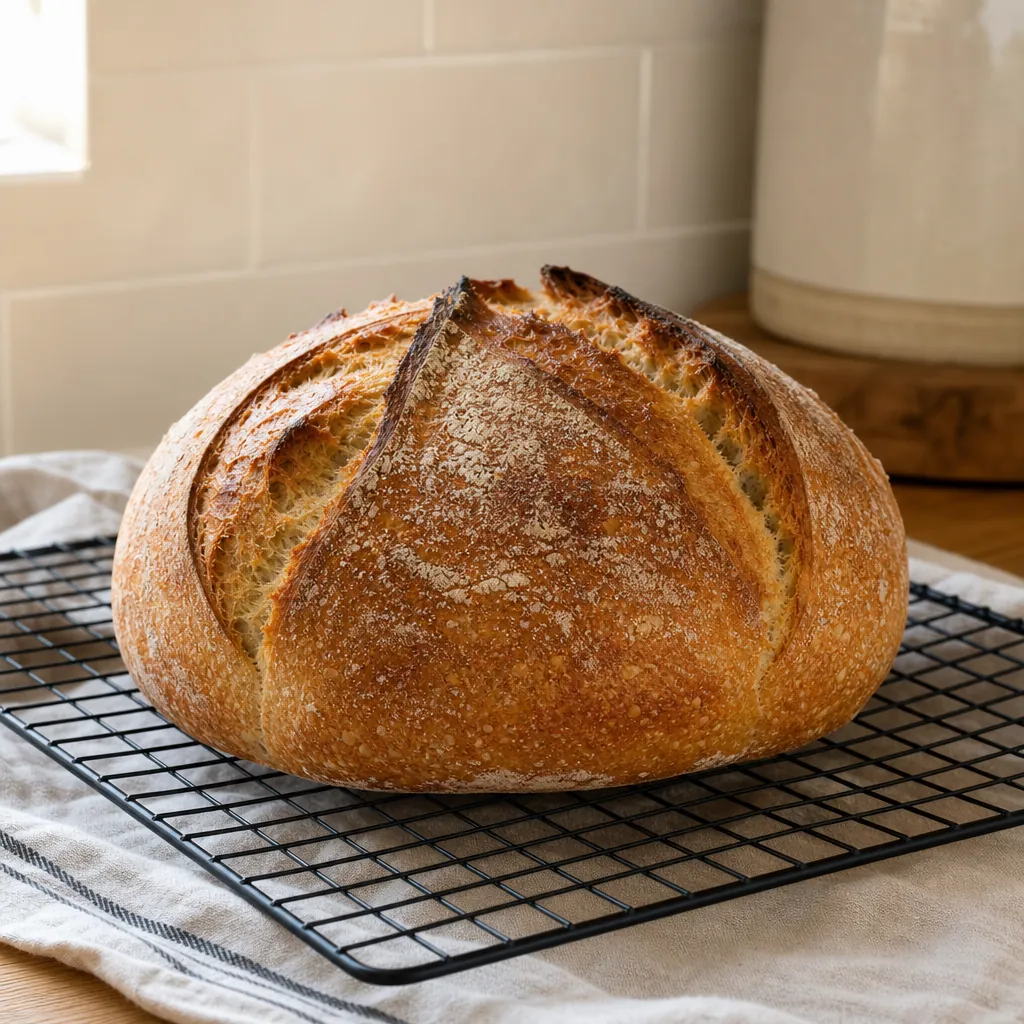
Use the oven when you have a whole loaf, half a loaf, or a generous chunk of crusty sourdough. Set the oven to 350°F. While it heats, lightly mist or sprinkle the outside of the bread with water. You are not trying to drench it. A little moisture on the crust is enough to help it regain some snap while the inside warms.
- Heat the oven to 350°F. Give it time to come fully to temperature so the bread warms evenly.
- Lightly dampen the crust. Use clean hands, a spray bottle, or a quick pass under a gentle trickle of water. Leave soft sandwich loaves dry.
- Place the bread directly on the rack or on a sheet pan. The rack gives a crisper crust. A pan is useful if you are warming several pieces or prefer easier cleanup.
- Warm for about 10 to 15 minutes. Start checking a smaller piece around the 8-minute mark. A large, dense loaf may need a little longer.
- Slice and serve soon after it comes out. The crust is at its liveliest while the bread is warm.
King Arthur Baking’s storage guidance uses the same practical approach: a little water and a 350°F oven for a whole loaf or large portion. Treat timing as a range, not a test. If the bread is already warm through and smells inviting, take it out. More time is not a prize.
If the loaf is only slightly stale, keep the reheating brief. If it has been cut for a day or two, the cut side can dry faster than the crust. Set the cut side down on the rack or pan so the warm air reaches the crust first. This gives you a better chance of a crisp exterior without pushing the exposed crumb too far.
For slices, use a toaster or toaster oven
Single slices do not need a full oven. A toaster is usually the fastest path to a warm, crisp slice for breakfast or a sandwich. Start at a medium setting and check after the first cycle. Sourdough often comes in thicker slices than packaged sandwich bread, so it may need a second, lighter pass rather than one aggressive cycle.
A toaster oven is especially helpful when the slices are too wide for a toaster, when you want several pieces at once, or when you are warming a cut piece with a little more character. Place the slices in a single layer and toast until the crust is crisp and the center is warm. Flip them only if your toaster oven heats strongly from one direction.
For a softer result, warm slices in a skillet over low to medium heat. Cover it loosely for the first minute so the center gets warm, then uncover and turn the bread once or twice until the surfaces are lightly crisp. A tiny bit of butter or olive oil is welcome if that is the breakfast you want, but it is not required. Keep the heat moderate. A hot pan can darken the outside long before the middle has had a chance to warm.
What to do with frozen sourdough
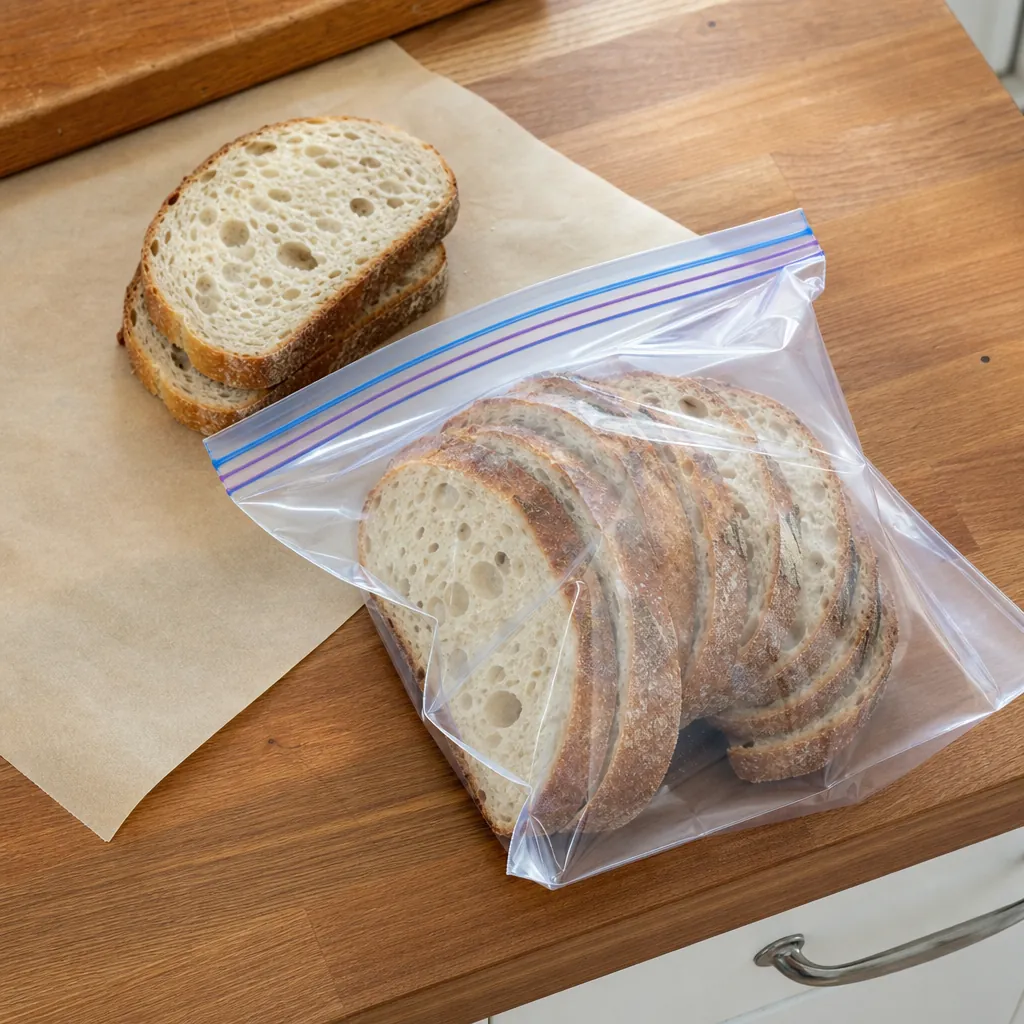
Freezing is one of the most useful ways to save a good loaf for later, especially when you know you will not finish it in a couple of days. For everyday ease, freeze it in slices or in the portion your household usually eats at one meal. That way, you can take out exactly what you need instead of repeatedly warming and cooling the same loaf.
Frozen slices can go straight into a toaster or toaster oven. Start with the setting you would use for a fresh slice, then add a little more time if the center is still cool. The first round may look finished before the middle is ready, so a short second cycle is kinder than cranking up the heat at the beginning.
For a larger frozen piece, let it thaw while still wrapped. The wrapping helps keep condensation from settling directly on the crust. Once the bread has thawed, use the whole-loaf oven method. If you need it sooner, you can warm it at 325°F for a little longer, checking often, but the bread is easier to heat evenly once the center has had time to soften.
Our guide to freezing sourdough bread has a fuller plan for portioning, wrapping, and thawing. It is worth doing well because the freezer gives you the freedom to enjoy a fresh-baked loaf on your schedule rather than rushing to finish it.
When not to use the microwave
A microwave can warm bread, but it is rarely the best choice when you want the character of sourdough back. It heats the interior quickly without giving the crust much chance to crisp, which can leave a slice soft or chewy. If a warm piece of bread beside soup is all you need, a very short microwave burst can be fine. Eat it right away.
For any moment when texture matters, use dry heat after that quick burst or skip the microwave entirely. A toaster, a skillet, an air fryer on its bake setting, or an oven will give the exterior a better finish. Even a small toaster oven earns its counter space here. It offers enough control to warm a slice without turning a good loaf into a rubbery afterthought.
There is no shame in convenience. The useful rule is simple: use the microwave for speed, and use an oven, toaster, or skillet when you want a crisp crust. That one decision keeps expectations sensible and makes leftovers much more likely to feel like a proper meal.
Small details that keep the crumb tender
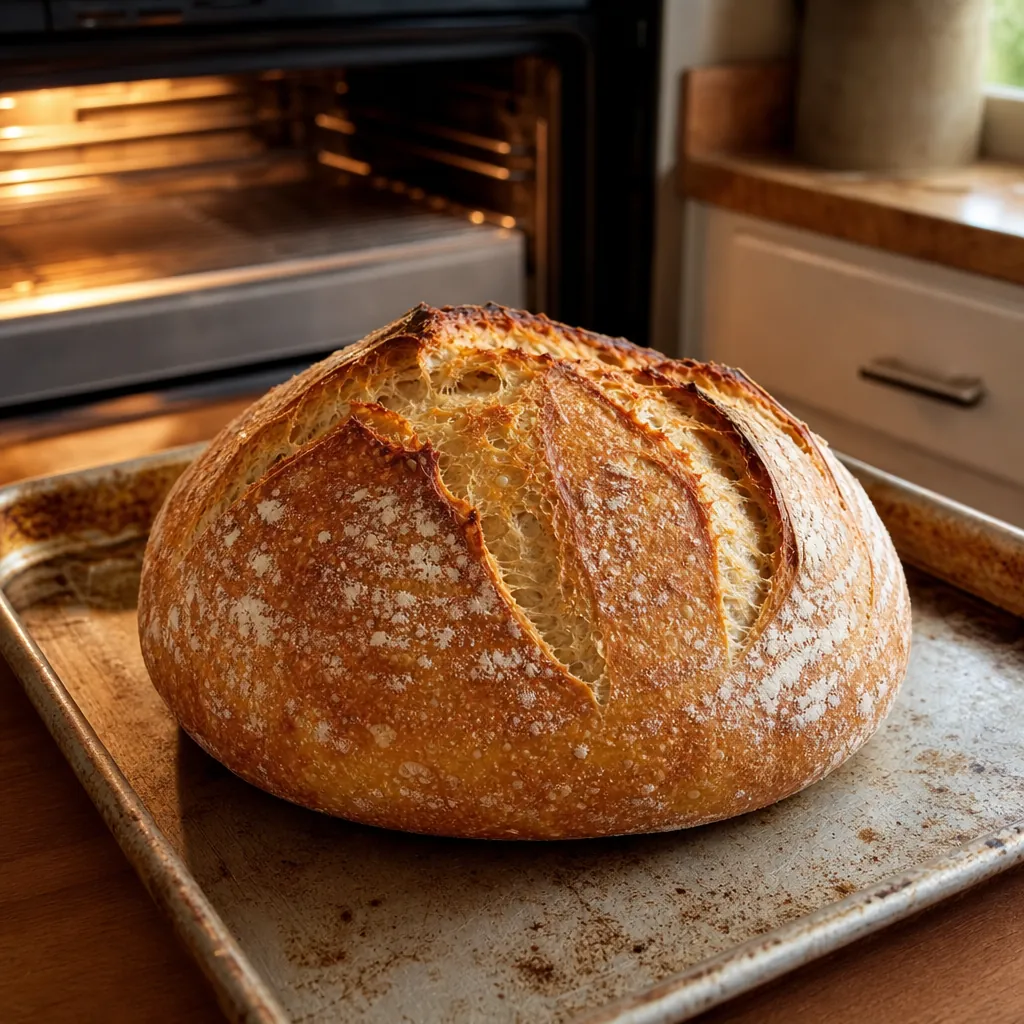
Most disappointing reheated bread comes down to too much heat, too much time, or reheating more than you need. Begin at a moderate oven temperature, check early, and save the remaining loaf for another meal. Bread does not need to be piping hot to be satisfying. It only needs a warm center and a crust that feels alive again.
Skip soaking the loaf. A light mist works because it freshens the surface while the oven does the rest. A wet crust can become soft before it has the chance to crisp. Likewise, keep foil for the rare moment you want a very soft result. Foil traps steam, which can be useful for an extra-dry piece, but an uncovered loaf is the clearer choice when crust is part of the point.
Give thick bread a minute to settle after it comes out of the oven. Steam is still moving through the crumb, and cutting immediately can make the middle feel gummy. You do not need a long cooling ritual for a loaf that was already baked, but one or two minutes on the counter helps the texture land where you want it.
Turn warm sourdough into an easy meal
A warmed loaf is more than a side dish. It can make a simple meal feel intentional: toast beside eggs, thick slices under soup, a grilled cheese with a crisp exterior, or a bread basket for pasta night. If you are wondering what kind of loaf suits the meal, our guide to sourdough flavor can help you choose between a gentle tang, a sturdy crust, and a softer sandwich-style crumb.
Homestyle Dough makes breads to order in Council Bluffs for the meals that are worth lingering over. Browse the current sourdough bread options when you are choosing your next loaf, or visit the bakery menu to see what is available for a bread basket, dinner, or weekend breakfast.
The useful takeaway
For a whole loaf, use a 350°F oven, a lightly dampened crust, and a close eye after about 10 minutes. For slices, use a toaster, toaster oven, or low skillet. For frozen bread, portion it before freezing so you can warm exactly what you need.
Keep the heat moderate, resist the urge to overdo the time, and serve the bread while it is warm. It is a small habit, but it lets a good sourdough loaf keep doing what it was made to do: make an ordinary meal feel more cared for.
Frequently asked questions
What is the best way to reheat a whole sourdough loaf?
For a whole loaf or a large piece, lightly dampen the crust and warm it uncovered in a 350°F oven for about 10 to 15 minutes. Check it early, since loaf size and oven accuracy both affect timing.
Can I reheat sourdough bread in the microwave?
You can warm a single slice briefly in the microwave when speed matters, but it will not give you a crisp crust. For a better texture, use a toaster, toaster oven, skillet, or regular oven instead.
Can I reheat sourdough straight from the freezer?
Yes. Individual slices can go straight into a toaster or toaster oven. For a larger frozen portion, thaw it while wrapped, then refresh it in the oven once the center is no longer frozen.
Should I put water on sourdough before reheating it?
A light mist or a quick sprinkle on the outside of a crusty loaf can help the crust crisp as it warms. The loaf should be lightly dampened, not soaked. Skip this step for soft sandwich bread or thin slices headed to the toaster.
How long is reheated sourdough good for?
Reheated bread is best enjoyed while it is still warm. Warming improves the next meal, but it does not reset the loaf for several more days. Store any remaining bread as you normally would and reheat only the portion you plan to eat.
Related posts
Sourdough Bread for Sandwiches: A Simple Guide
Choose, slice and toast sourdough bread for sandwiches that stay balanced, easy to eat and full of flavour.
Gluten Free Bread: Meet Our New White Loaf
Meet our new gluten free white bread, with easy toast and sandwich ideas and a simple way to order from Homestyle Dough.
What Does Sourdough Taste Like?
A clear guide to sourdough flavour, from its gentle tang and crust to the small details that make one loaf taste different from another.
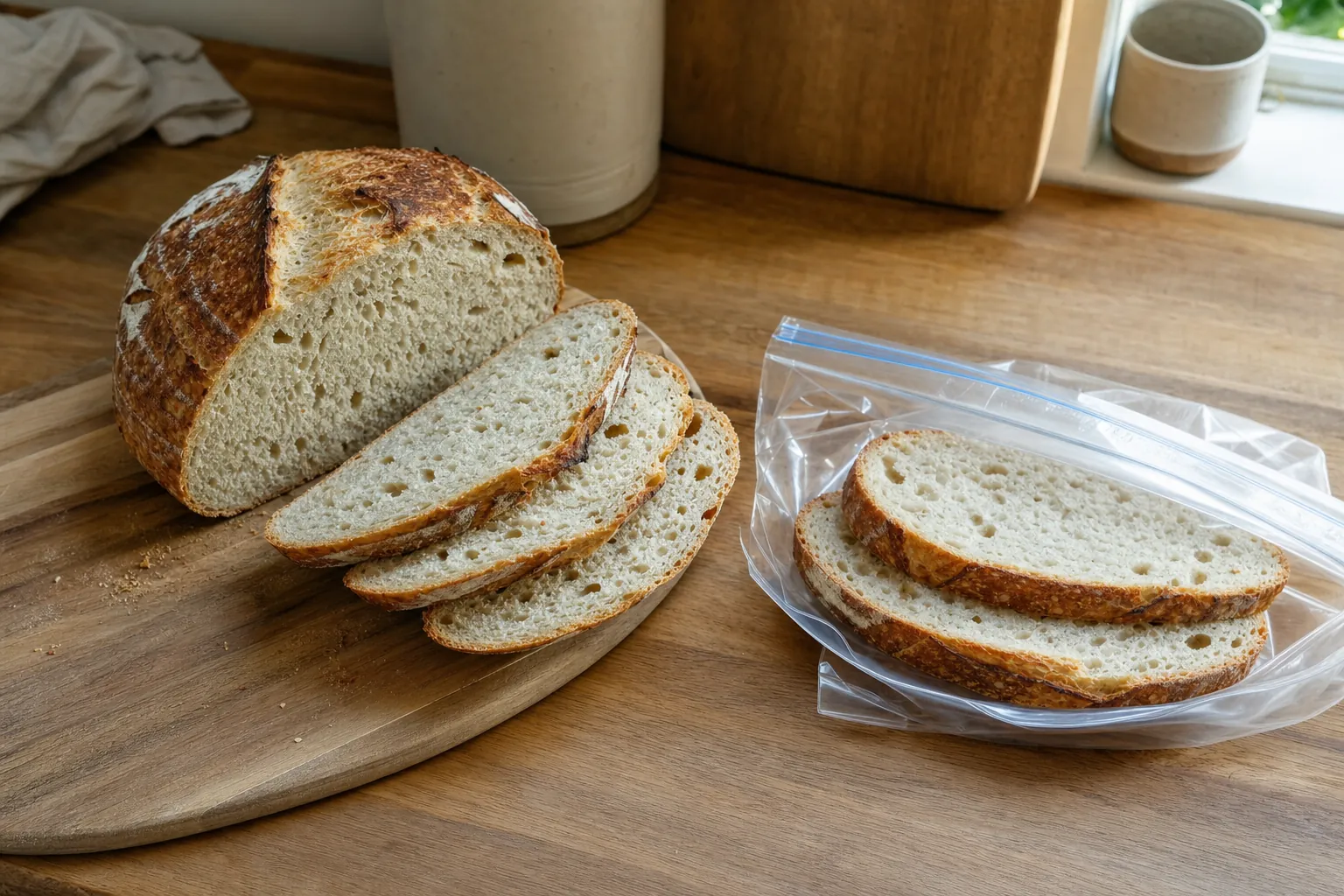
Can You Freeze Sourdough Bread? A Simple Guide
Yes. Freeze a whole loaf or individual slices the right way, then bring back the crust and flavor when you are ready to eat.